


Do Vets Recommend a Cat Water Fountain? What to Know Before You Buy
Do vets recommend a cat water fountain? Many do suggest one, but as one tool among several for getting more water into a cat, not as a cure. The cats most likely to benefit are those with kidney or urinary problems and cats that drink very little from a bowl. The research behind fountains is modest, and a fountain only helps if your cat actually uses it and you keep it clean.
This guide covers what vets and studies say, how to choose between filtered and filterless designs, how to clean a fountain properly, and where to put it so your cat will drink from it. Each topic links to a more detailed guide if you want to go deeper.
Cat water fountain guides by topic
Use this list to jump straight to the question you have.
Is a fountain worth it? Cats and dogs
- Is a cat water fountain worth it?: how much water cats need, what two small studies found, and a five-step plan for getting your cat used to a fountain.
- Choosing one fountain for cats and dogs: the features to compare when two species share a water station, plus basic upkeep.
- Top reasons to get a dog water fountain: why fresh, moving water can suit dogs and what to check before buying one.
Choosing a fountain: filtered or filterless
- Filterless vs filtered fountain maintenance: compares the chores each design creates, so you can pick the one you will keep up with.
- How a filterless cat fountain works: how clean water and used water travel separate paths, and why that design needs no replacement filter.
- What a cat fountain filter actually does: what mesh, carbon, and resin layers can and cannot remove, and why "filtered" never means sterile.
- Cutting cat fountain filter costs: how to work out your yearly filter spend, stop filters clogging early, and decide when a different design makes sense.
Cleaning, maintenance, and biofilm
- The biofilm problem in pet fountains: what the slimy film is, why it matters, and a daily, weekly, and monthly cleaning routine.
- Biofilm and cat chin acne: how slime and scratched plastic may play a part in chin acne, and when the skin needs a vet's look.
- Cat fountain maintenance schedule: when to refill, when to replace all the water, and when to wash the whole fountain.
- How to clean a filterless cat fountain: step-by-step cleaning for two-tank fountains without mixing the clean and used sides.
- Keeping your cat's drinking water clean: the usual sources of contamination, from food and hair to tap water problems, and how to fix each one.
Placement and everyday use
- Why fountain placement matters: four tests for a good spot, six locations that put pets off, and a simple placement experiment.
- Keeping fountain water fresh while you are out: sensor vs timed refresh, what to check before leaving, and why a backup bowl still matters.
- Adding ice cubes to a cat water fountain: the possible upsides and downsides of chilled water and how to try it safely in hot weather.
Do vets recommend water fountains for cats?
Yes, many vets suggest a fountain, usually as part of a wider plan to raise a cat's water intake. Cats tend to drink less than they need, especially on a dry-food diet, so anything that makes water more appealing is worth trying. A fountain is one option. Wet food, extra water bowls around the home, and wide, clean drinking surfaces are others.
What vets do not usually say is that every cat needs a fountain. Some cats drink happily from a well-placed bowl. Others ignore a fountain completely. The right answer depends on your cat's health, habits, and comfort with the device.
What the research shows
The evidence is limited and mixed. Two small studies from 2010 are the ones most often cited. In one, healthy cats drank slightly more from a fountain than from a bowl, but their urine was not meaningfully more dilute. In the other, the group as a whole showed no clear preference for flowing or still water, while individual cats had strong preferences for one or the other.
The practical takeaway: a fountain can help some cats drink a bit more, but results vary a lot from cat to cat. Watch what your own cat does rather than assuming the fountain is working.
Which cats benefit most
Vets most often bring up fountains, along with other ways to add water, for these cats:
- Cats with chronic kidney disease. Keeping these cats well hydrated is a common part of their care, and vets often recommend increasing their water intake.
- Cats with urinary problems. For cats with a history of crystals, stones, or cystitis, more water helps keep urine dilute, which is why vets often advise it.
- Cats on mostly dry food. Dry food contains little moisture, so these cats have to get more of their water from drinking.
- Senior cats and overweight cats. Older cats are more prone to kidney disease, and overweight cats are at higher risk of urinary problems.
Cats with diabetes or kidney disease often drink more than usual because of the condition itself. They need constant access to fresh water, never restricted water. A sudden rise or drop in how much your cat drinks can be a sign of several health problems, so talk to your vet if you notice a change. A fountain should never hide a drinking change you would otherwise spot.
If kidney health is your main concern, diet matters as much as the water bowl. See wet vs dry food for feline kidney health.
When a fountain may not help
There are good reasons a vet might suggest something other than a fountain. Some cats are frightened by pump noise or moving water. A fountain that is not cleaned regularly can grow a slimy bacterial film and end up dirtier than a bowl washed every day. If you know you will not keep up with cleaning, a simple stainless steel or ceramic bowl, washed daily, may be the better choice.
When vets do suggest a fountain, the advice usually comes with conditions: choose one that is quiet, easy to take apart, and simple to clean, and keep a regular bowl available while your cat gets used to it.
Why some cats ignore their water bowl
A cat that rarely drinks from its bowl is not necessarily being difficult. Several things can put a cat off still water:
- Stale water. Water that has been sitting for a day picks up dust, hair, and saliva, and many cats prefer it fresh.
- Bowl shape. Some cats seem to dislike a narrow or deep bowl where their whiskers brush the sides.
- Location. A bowl next to the litter box, in a busy walkway, or beside a noisy appliance can feel unsafe or unpleasant.
- Food nearby. Some cats drink more readily when water is a few steps away from their food, though this varies by cat.
Low water intake matters because concentrated urine is linked to urinary problems such as crystals and blockages, which are painful and can be an emergency. If your cat strains in the litter box, passes little or no urine, or cries while urinating, contact your vet right away.
A fountain addresses the first point by offering fresher, moving water. It does nothing for the other three, which is why placement and bowl design matter just as much.
Is a cat water fountain worth it?
For many households, yes, as long as you treat it as a device that needs regular care. The main benefits are practical rather than medical: fresher water, fewer refills, and a drinking spot some cats find more interesting than a bowl.
- Moving or refreshed water. Circulating or regularly replaced water tends to stay more appealing than water left standing in a bowl all day.
- Larger reservoirs. Most fountains hold more than a bowl, so you top up less often. You still need to replace all the water and wash the fountain on a schedule.
- Possible extra drinking. Some cats drink a little more from a fountain. Others do not change at all.
The trade-offs are real too. A fountain costs more than a bowl, needs power, and can need filters. Some cats take days or weeks to accept one, and a few never do. Introduce it slowly: let your cat inspect it while switched off, then turn it on, and keep the old bowl out until your cat drinks from the fountain on its own. For a fuller look at the pros and cons and a step-by-step introduction, read whether a cat water fountain is worth it. To check how much water your cat should be getting each day, see the pet hydration guide.
Fountains for dogs and mixed households
Dogs also tend to drink readily from fresh, moving water, and the same rules apply: keep it clean and put it where the dog can drink without being crowded. Dogs usually drink far more than cats, so check that the reservoir size matches your dog's daily intake before you buy. If cats and dogs share one fountain, compare capacity, noise, bowl material, and how easy the parts are to wash. A second water source is a good idea in any multi-pet home.
For more detail, see the reasons to get a dog water fountain and how to choose a fountain for cats and dogs.
How to choose a cat water fountain
The best fountain is the one your cat will use and you will actually keep clean. When vets talk about choosing a fountain, they tend to focus on a few practical points rather than brands.
| What to check | What to look for | Why it matters |
|---|---|---|
| Material | Stainless steel, glazed ceramic, or glass drinking surfaces | Smooth surfaces are easier to scrub. Plastic scratches over time, and slime can hide in the scratches. |
| Ease of cleaning | Few parts, wide openings, no sealed corners | If you cannot reach every wet surface, you cannot clean it properly. |
| Noise | A quiet pump and gentle flow | Noise-sensitive cats may avoid a loud or splashy fountain. |
| Filter or filterless | The ongoing filter cost, or the extra tank to empty | Filters are a recurring purchase. Filterless designs swap that for a used-water tank you have to empty and wash. |
| Capacity and power | A reservoir sized for your pets; a cord kept out of reach, or a rechargeable battery | Bigger tanks mean fewer refills. Electrical parts should be kept away from the water and from chewing. |
Filtered vs filterless fountains
A filtered fountain pumps the same water around in a loop. The filter catches hair and crumbs, and a carbon layer may reduce some odors and tastes. It does not sterilize the water, and it does not replace washing the bowl, reservoir, and pump.
A filterless fountain with clean and wastewater separation works differently. Fresh water comes from a clean tank, and water that has sat in the drinking bowl is sent to a separate used-water tank instead of going back into the supply. That removes filter changes, but you still have to empty the used-water tank and wash both sides.
Neither design is maintenance-free. Pick the one whose chores you are less likely to put off:
- If you tend to forget to buy filters or dislike taking a pump apart, a filterless design may suit you better.
- If you would rather refill one reservoir and do not mind rinsing a pump, a filtered model may feel simpler.
For the details, read how filterless and filtered fountains compare on upkeep, how a filterless fountain keeps clean and used water apart, and what each filter layer really does.
The ongoing cost of filters
Filter costs are easy to underestimate. To see your real yearly spend, multiply the cost of one filter by the number of replacements your fountain's manual calls for each year. If filters clog well before that interval, the cause is usually hair or debris reaching them too fast. Cleaning the bowl, intake, and pump more often is the fix, not stretching each filter longer.
Always use filters made for your exact model. Similar-looking cartridges can fit poorly and let water bypass the filter. If the yearly cost stays high even after you fix early clogging, compare it with a fountain that does not use disposable filters. The guide to cutting cat fountain filter costs walks through the numbers.
Cleaning, maintenance, and biofilm
Cleaning is where most fountains succeed or fail. Moving water is not self-cleaning, and a neglected fountain can become less hygienic than an ordinary bowl.
What biofilm is and why it matters
If the inside of your fountain feels slippery, that slime is biofilm: bacteria and other microbes stuck together in a protective layer on wet surfaces. It can form on bowls, reservoirs, pump housings, and tubing. A pink or orange ring is a common sign of one type of bacterial buildup. Because biofilm clings to surfaces, rinsing alone will not remove it. You have to scrub.
A dirty fountain can put cats off drinking, which defeats the purpose. Biofilm may also contribute to chin acne in some cats, especially those drinking from scratched plastic. If your cat has black specks, redness, or bumps on the chin, or shows vomiting, diarrhea, lethargy, or straining to urinate alongside a slimy fountain, clean the fountain and talk to your vet.
Read more in the biofilm guide for pet fountains and how fountain slime relates to chin acne.
A simple maintenance schedule
Use this as a starting point and follow your fountain's manual if it asks for shorter intervals.
| Task | How often | What to do |
|---|---|---|
| Check water and flow | Daily | Make sure the level is above the minimum line, the water looks and smells normal, and your cat can reach it. |
| Refill | When the level gets low | Add fresh water only if the remaining water still looks clean. |
| Replace all water and wash | At least weekly | Empty everything, take the fountain apart, scrub all wet parts, rinse, and refill. |
| Filter and pump check | During the weekly wash | Clear hair from the pump, and replace disposable filters on the maker's schedule. |
Clean sooner if several pets share the fountain, the room is warm, food or fur lands in the bowl, or you notice slime, cloudiness, or an odd smell. Refilling and replacing are different jobs: topping up keeps water available, but only a full change removes the saliva and debris that have built up. See the full cat fountain maintenance schedule, and for the other ways water gets dirty, read how to keep your cat's drinking water clean.
Cleaning a filterless fountain
Two-tank fountains need a slightly different routine. Treat the clean side and the used side as separate systems:
- Switch the fountain off and remove the washable parts as the manual describes.
- Empty the used-water tank without pouring it through the clean tank or bowl.
- Wash the clean tank, bowl, and clean-side parts first, then the used-water parts last.
- Keep the electrical housing dry unless the manual says a part is washable.
- Reassemble with clean hands and run a short test to check that water flows the right way.
The step-by-step version is in how to clean a filterless cat fountain.
Where to put a cat water fountain
A fountain in the wrong spot can go untouched even if it works perfectly. Drinking leaves a cat exposed, so it wants a place where it feels safe. A good location passes four tests:
- Approach: your cat can reach it without crossing a busy or frightening area.
- Awareness: your cat can see the room while drinking instead of facing a wall.
- Stability: the fountain sits level and does not wobble, splash, or vibrate.
- Retreat: your cat can leave without squeezing past a person or another pet.
Keep the fountain away from the litter box, direct sun, heaters, and noisy machines. If it sits beside the food bowl and your cat ignores it, try a spot a few steps away while keeping the old water option available. In homes with more than one pet, a second water station stops one animal from guarding the only source. For six common placement mistakes and a simple test routine, see why fountain placement affects whether a pet uses it.
Using a fountain while you are out
Fountains with automatic refresh can keep the bowl water fresher during a workday, either by replacing water after your cat drinks or on a timer. Before you leave, start with a clean bowl and fresh water, and check that the mode you picked works for your cat. A fountain should never be your cat's only water source during a longer absence. Leave a separate bowl a short distance away, and for overnight trips, arrange for someone to check on your cat. Read more about keeping fountain water fresh while you are away.
Hot weather and ice cubes
Some owners add ice to a fountain in summer to make the water more tempting. It can work for cats that like cool water, but very cold water may put other cats off drinking. If you try it, add one or two cubes at a time and watch whether your cat drinks more or less. Keeping the fountain out of direct sun is often enough. The pros, cons, and alternatives are covered in whether you can add ice cubes to a cat water fountain.
A Water Fountain to Consider: Meowant DF03
If filter changes are the chore you want to drop, the Meowant DF03 Water Fountain is a filterless option built around clean and wastewater separation. Here is what the product page states:
- No replacement filters. Clean water and wastewater are kept in separate tanks, which removes the need for replacement filters.
- Tank capacity. Clean water tank: 4.5L. Wastewater tank: 2.1L.
- Sensor Mode. When Sensor Mode is enabled and the stainless steel bowl is empty, your cat gets a fresh supply of water about 15 minutes after drinking.
- Timed refresh. You can also set automatic refreshes every 4 or 6 hours.
- Battery. A 2000mAh USB-C rechargeable battery lasts up to 19 days on a single charge. Battery life varies with the operating mode.
- Electrical layout. The electrical components are positioned above the water.
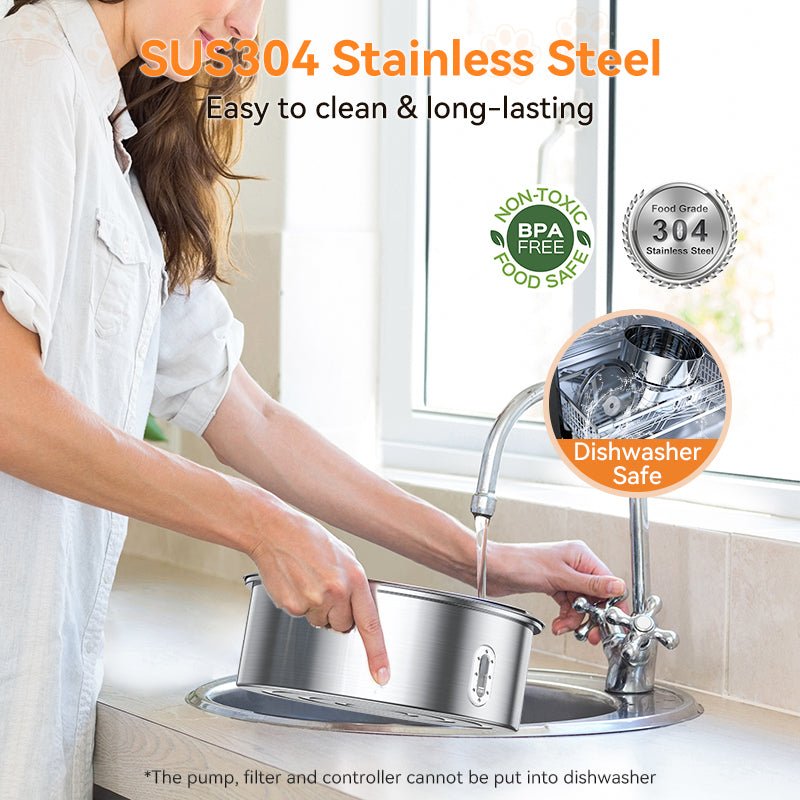
The stainless steel bowl is easier to scrub than scratched plastic. Like any fountain, the DF03 still needs regular cleaning: wash the bowl, empty and clean the wastewater tank, and wash the clean tank on schedule.

The bottom line
Many vets see a water fountain as a reasonable way to encourage drinking, especially for cats with kidney or urinary problems. The research shows a small, inconsistent effect, so treat a fountain as one part of a hydration plan alongside wet food and well-placed bowls. Choose one that is easy to clean, put it somewhere your cat feels safe, and keep up with weekly washing. If filter upkeep is what puts you off, a filterless fountain such as the Meowant DF03 is worth a look, and any change in your cat's drinking is worth a conversation with your vet.
For related reading, see the pet hydration guide on how much water dogs and cats need daily, the guide to how cats get urinary tract infections, and advice on how long cats can safely stay home alone.
