


Can Cats Share a Litter Box? When It Works and How Many You Need
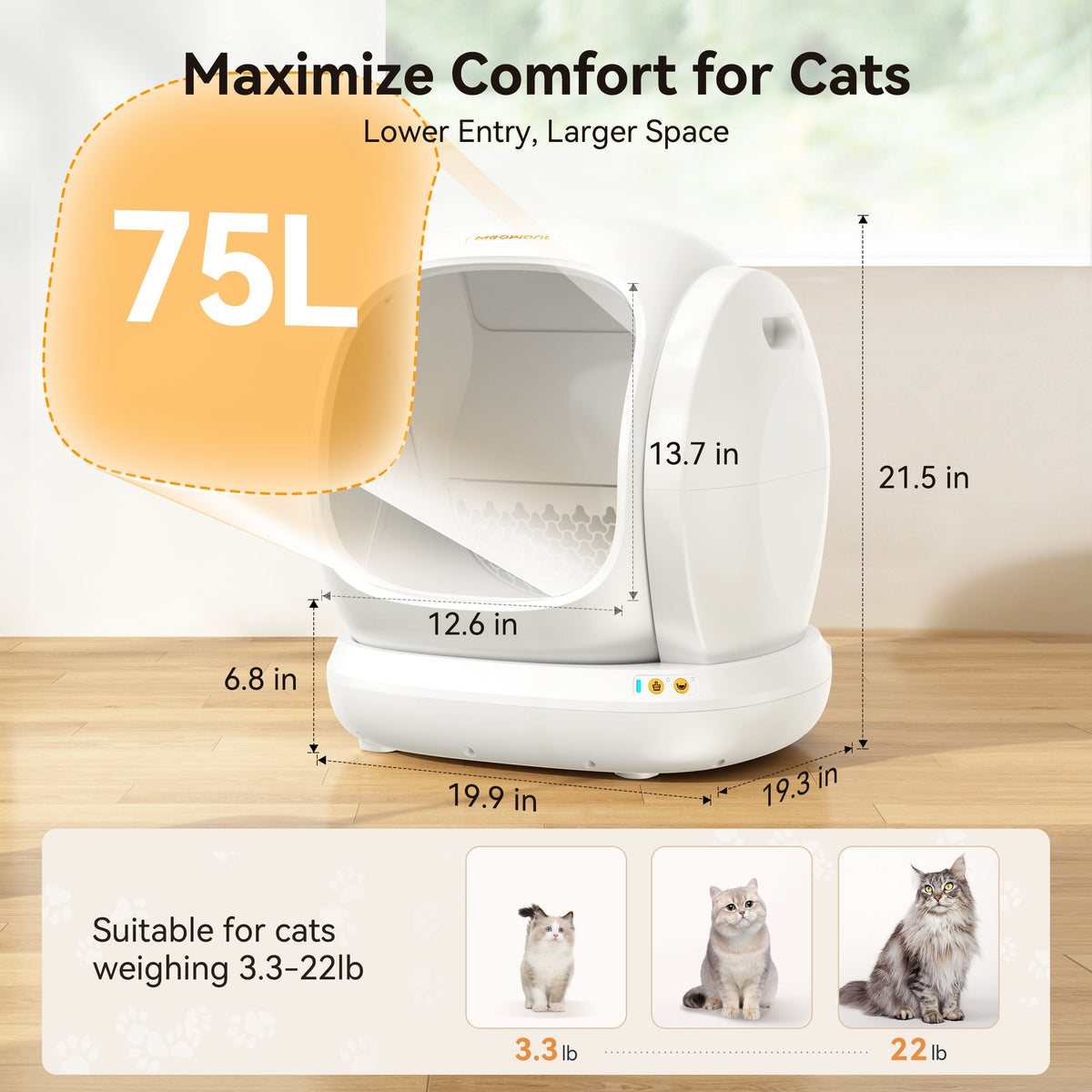
Cats can share a litter box, and some bonded pairs do it without complaint. But sharing is a compromise, not the goal. Feline welfare guidelines from the AAFP and ISFM recommend separate resources, litter boxes included, in different locations, and the usual rule is one box per cat plus one extra. Two cats should have three boxes. A self-cleaning box keeps a shared box cleaner, but it doesn't replace the extra boxes.
This guide explains why the rule exists, when sharing can work for a while, the signs that cats are competing for the box, how many boxes you need and where the rule falls short in real homes. It also covers whether several cats can share a self-cleaning litter box and how to introduce one.
Multi-cat litter box guides in this series
Each guide below goes deeper on one question. The sections further down this page give you the short answer first.
Sharing rules and competition
- Solving litter box competition in multi-cat homes: why cats compete for boxes and a setup checklist that reduces it.
- Can a clean box reduce territorial issues?: how box cleanliness affects scent signals and tension between cats.
- What the one-per-cat-plus-one rule misses: why the number of usable boxes matters more than the count on paper.
Self-cleaning boxes for multiple cats
- Can multiple cats use a self-cleaning litter box?: what to look for in a self-cleaning box for a multi-cat home.
- How to get multiple cats to share one smart box: a phased introduction plan so every cat accepts the new box.
Can two cats share a litter box?
They can, but most homes do better when they don't have to. The one-box-per-cat-plus-one rule exists for three reasons.
- Territory. Cats are territorial, and a litter box is a valuable resource. One cat may guard the only box or wait near it, and the other cat may avoid it rather than risk a confrontation.
- Hygiene. A single box used by two cats fills up twice as fast. Many cats refuse a box that already has waste in it, especially another cat's.
- Stress and health. A contested or dirty box can lead to peeing or pooping outside the box, and a cat that holds urine to avoid the box is under strain. Stress is also linked to bladder problems in cats.
Extra boxes also make health problems easier to spot. With one shared box, you can't tell which cat produced the huge clump, the bloody urine or the diarrhea.
When can cats share a litter box?
Sharing is most likely to work, at least for a while, when:
- The cats are a bonded pair, often littermates or cats raised together, that groom and sleep together.
- Both cats are relaxed, and neither blocks, stalks or ambushes the other.
- The box is large and is scooped at least twice a day.
- Both cats keep using it normally, with no accidents elsewhere.
Even then, add at least one extra box if you can. Sharing is a poor idea when there is any tension between the cats, while you're introducing a new cat, when one cat is old, has arthritis or is unwell, or when one cat has a history of urinary problems. In those situations, the cost of one cat avoiding the box is too high.
Kittens from the same litter often share happily at first. As they grow, give them more boxes before problems start rather than after.
Signs your cats are competing for the litter box
Competition is often quiet. Watch for:
- One cat sitting near the box, in the doorway to its room or on the route to it
- One cat waiting until the other is asleep or out of the room before going
- A cat rushing in and out, or not digging and covering
- Ambushes or swats as a cat leaves the box
- Urine or feces just outside the box, or in other rooms
- A cat hiding more, overgrooming or seeming tense
If you see these, add a box in a separate area that the guarding cat doesn't control, and keep every box very clean. Read how to solve litter box competition in multi-cat homes and whether a clean box can reduce territorial issues.
Any cat that suddenly starts going outside the box, strains, or visits the box often with little result should see a vet first. A cat that strains and produces little or no urine needs a vet straight away. Behavior fixes won't help a medical problem.
How many litter boxes do you need?
| Number of cats | Recommended litter boxes |
|---|---|
| 1 | 2 |
| 2 | 3 |
| 3 | 4 |
| 4 | 5 |
Where you put them matters as much as how many:
- Spread them out. Put boxes in different rooms or areas. Several boxes in one spot can be guarded like a single box.
- Cover every floor your cats use regularly.
- Leave an escape route. Each box needs an open approach so a cat can see who's coming and leave.
- Keep them away from food, water and noisy appliances.
For more on choosing spots, see where to put a litter box.
Where the N+1 rule falls short
The rule is a starting point, not a guarantee. Three boxes in the same laundry room are, to a cat, closer to one large box. A box that's technically available but sits behind the dog's bed, at the top of stairs a senior cat avoids, or in a room one cat patrols isn't a real option for the cat that needs it.
- Count usable options, not boxes. Ask whether each cat can reach at least one box without passing the cat they avoid.
- Plan for the least confident cat in the house, not the boldest.
- Offer some variety, such as one open and one covered box, until you know what each cat prefers.
- Re-check the setup when something changes: a new pet, a move, an aging cat.
Read more about what the one-per-cat-plus-one rule misses in real homes.
Can multiple cats share a self-cleaning litter box?
Yes, a self-cleaning box can be used by more than one cat, and it handles sharing better than a manual box because waste is removed soon after each visit. The next cat finds clean litter instead of the last cat's waste, which removes one of the main reasons cats refuse a shared box. Many models also record visits, which helps you notice changes in each cat's habits.
What it doesn't change is territory. A cat that guards a regular box can guard a self-cleaning one too, and some cats are wary of the motor and movement. So treat a self-cleaning box as one of your boxes, not a replacement for the rest. In a two-cat home, one self-cleaning box plus at least one more box elsewhere is a sensible setup.
Expect the waste drawer to fill faster and the litter level to drop sooner with more cats, so check both more often. Read more on whether multiple cats can use a self-cleaning litter box, and on how safe smart litter boxes are for cats.
Meowant self-cleaning boxes in multi-cat homes
Meowant's two current flagship boxes are both built for multi-cat and large-cat homes, with the same core cleaning and odor control. They differ in design:
- Meowant SC09 (MW-SC09): fully enclosed and private, with an 8.27-inch low entrance and a sealed 6.7L waste drawer. It connects to the AIRPET app, which can record usage data for 30+ cats and track weight changes. That figure is how many cats the app can keep records for, not how many cats one box can serve.
- Meowant SC10 (MW-SC10): open-top with a raised rim and a 500 mm extended litter bed, so cats can stand and stretch without a roof overhead. Its 11.9L enclosed waste bin needs emptying less often.
The SC10 has an on-body display that shows visit count, visit duration and average duration, completed cleanings and error alerts. Both boxes are quiet, at around 35 to 36 dB.
Choose by your cats and your space: the SC09 suits cautious, senior or smaller cats and living areas; the SC10 suits cats that dig hard or like room to stretch, and spots like utility rooms or balconies. Neither is the better box. Whichever you choose, keep the one-per-cat-plus-one count. If you're comparing other models, here are the smart features to look for in a self-cleaning cat litter box.
How to get multiple cats to use one smart box
- Place it beside a box your cats already use, not in place of it.
- Start without automatic cleaning. Use manual mode, or run cycles only when no cat is nearby, until every cat is comfortable.
- Use familiar litter and scent. Fill it with the clumping litter your cats know, and add a little used litter from the old box.
- Watch the shyest cat. The bold cat will usually try it first. Don't remove the old box until every cat uses the new one reliably.
- Switch on automatic cleaning gradually, and keep at least one other box available for good.
Our guide on how to get multiple cats to share one smart box sets out a week-by-week plan.
Tips for managing litter boxes with multiple cats
- Follow the N+1 rule. One box per cat, plus one, so a dominant cat can't control every option.
- Spread the boxes out. Avoid putting them all in one spot where a cat can feel cornered.
- Scoop daily, ideally twice. A dirty box is the fastest way to send a cat elsewhere. Change the litter fully about once a week in a busy box.
- Watch for warning signs such as avoiding the box, overgrooming or accidents, and adjust the setup early.
- Respect preferences. Some cats like covered boxes and others feel trapped; some prefer fine litter and most dislike strong scents. Let each cat's choices guide you.
Litter boxes are one part of keeping the peace. Our guide to managing multi-cat homes covers food, water, resting spots and introductions, and if a cat has already stopped using the box, see why cats refuse the litter box and what you can do.
Should cats share a litter box?
Some cats will tolerate sharing, but it's rarely the best long-term setup. Territory, hygiene and stress can turn a shared box into a problem, often quietly. The safest plan is enough boxes, spread around the home and kept very clean, whether they're traditional or self-cleaning. A self-cleaning box makes upkeep easier, but understanding your cats' preferences and giving every cat a box they can reach is what keeps a multi-cat home calm.
Sharing a litter box: FAQs
Can two kittens share a litter box?
Young littermates often share without trouble. Still, give them a second box early, and plan for the full one-per-cat-plus-one count as they grow, so habits don't break down later.
Is one large litter box enough for two cats?
A large box helps, but it doesn't solve guarding or the "one box, one location" problem. Two cats should ideally have three boxes in different places.
How often should a shared litter box be cleaned?
Scoop at least twice a day and change the litter fully about once a week. A self-cleaning box removes clumps after each visit, but you still need to empty the drawer, top up litter and wash it on schedule.
Can a new cat use the resident cat's litter box?
Avoid it during introductions. Give the new cat their own box in their base room, and keep the resident cat's boxes where they are. Shared boxes can come later, if the cats get along, and only alongside extra boxes.
